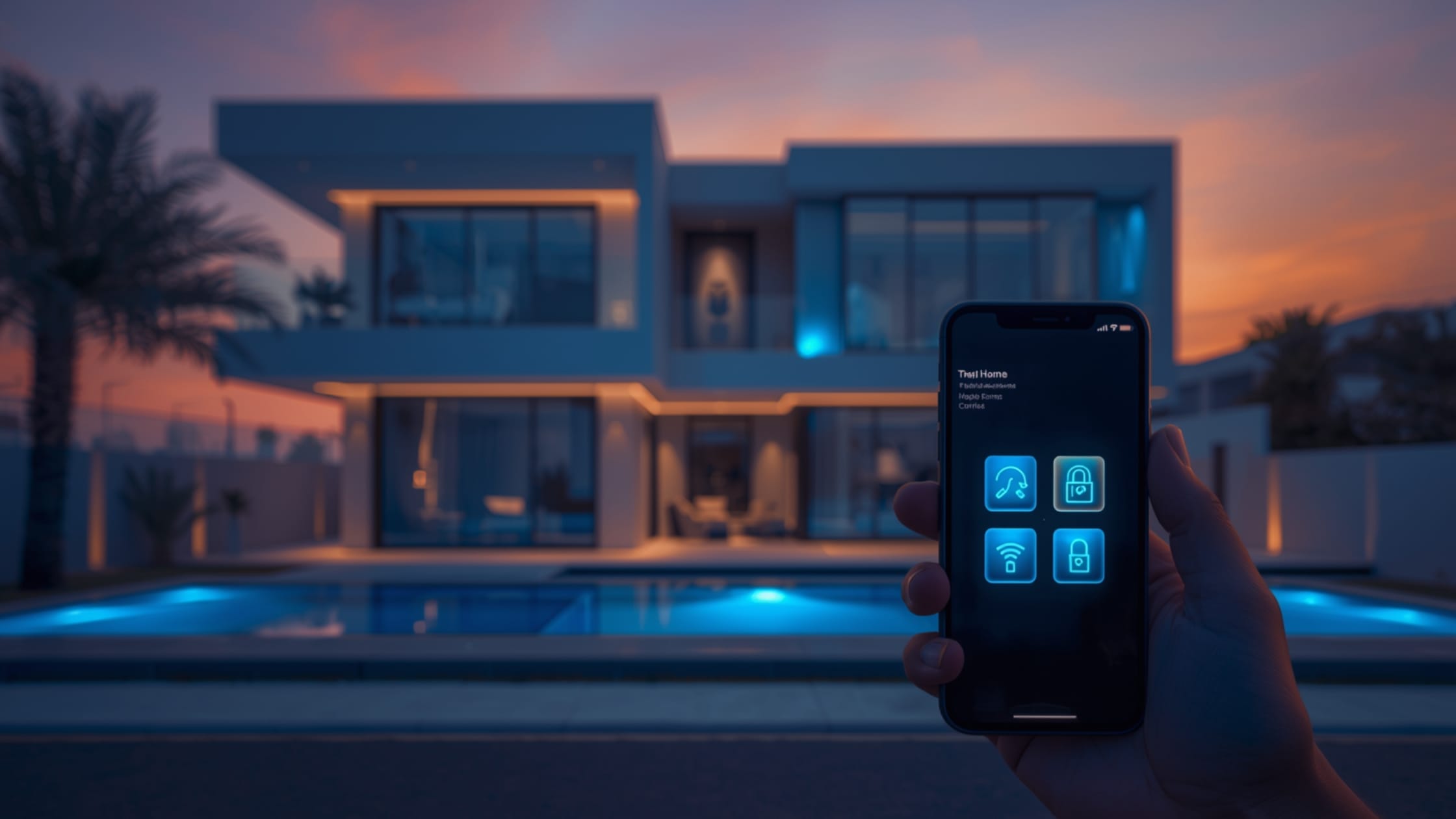
Imagine driving home through Dubai’s intense afternoon heat temperatures reaching 45°C outside. As you approach your residence, your door unlocks automatically, lights activate and your air conditioning has already been cooling your living space for twenty minutes. No struggling against extreme heat. No fumbling with keys. Just your home welcoming you exactly as it should.
This seamless experience represents exactly what is a smart home in practical, everyday terms for UAE residents.
What Is a Smart Home? A Simple Definition
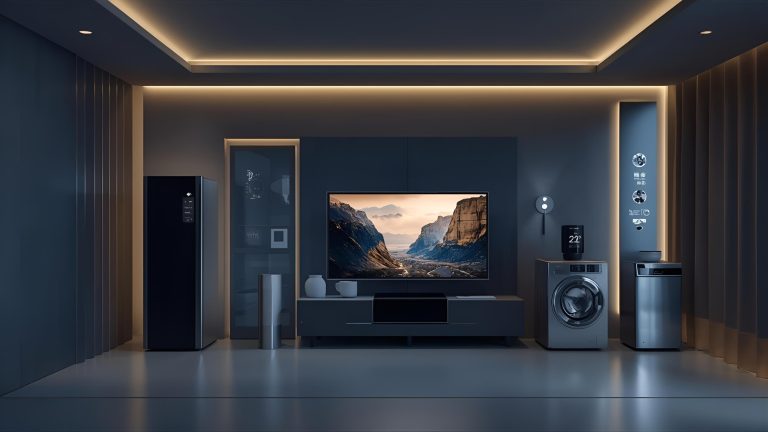
A smart home is a house where devices are connected to the internet and can be controlled using your smartphone or voice. This includes things like lights, air conditioning, security cameras, door locks and even entertainment systems.
Instead of working separately, these devices can be connected into one system. This means they can work together automatically. For example, when you arrive home, the lights can turn on, the temperature adjusts and your system gets everything ready without you doing anything. When you leave, the lights switch off, the AC reduces and security systems activate on their own.
Keeping your home cool in the UAE isn’t just about escaping the heat; it’s about making sure your DEWA bill doesn’t skyrocket during those endless summer months. Smart home technology has moved past being a “cool gadget” and is now a practical tool for managing a household efficiently.
What is a Smart Home, Really?
Think of a smart home as an ecosystem built on three pillars:
The Brain (The Hub): This is the central controller that talks to all your gadgets. You’ll often hear terms like Zigbee, Z-Wave or Matter. Matter is the big one to watch because it finally lets different brands (like Apple, Google and Amazon) play nice together in the same house.
The Muscle (The Devices): These are the things that actually do the work, your smart plugs, motion sensors, cameras and thermostats.
The Nervous System (The Internet): A stable Wi-Fi connection is what ties everything together and lets you control your home from your phone while you’re at the office or traveling.
The Magic of Automation
The real value isn’t just turning a light on with your phone; it’s the automations. You can set “If/Then” rules that fit your life. For example:
- “If it’s sunset and you walk into the living room, turn on the lamps.”
- “If the temperature hits 24°C and someone is home, kick the AC into high gear.”
Essentials for Living in the UAE
If you’re looking to upgrade your villa or apartment in Dubai, these are the four areas where you’ll see the biggest impact:
1. Lighting Control
This is the easiest way to start. Whether you use smart bulbs or switches, you can set schedules so your lights turn on at dusk (great for security when you’re away) or use motion sensors so you never have to fumbled for a switch with your hands full of groceries.
2. Climate Management (The Game Changer)
Air conditioning is the lifeline of UAE homes, especially villas that run cooling almost year-round. Smart thermostats go beyond simple timers, they monitor occupancy and adjust temperature intelligently.
When no one is home, the system allows the indoor temperature to rise slightly, preventing unnecessary energy waste while maintaining a stable comfort baseline. As soon as presence is detected or you’re on your way home, the system gradually cools back to your preferred temperature automatically.
This steady, adaptive balancing uses less electricity than extreme cycles of turning AC completely off and back on again, which can actually demand more power in larger properties. Over time, many UAE residents see energy savings of 20–30% without sacrificing comfort, even through long summer months.
3. Security Infrastructure
From video doorbells to smart locks, being able to see who is at your door from your phone wherever you are in the world is a massive relief. For apartment dwellers in high-rise buildings, it adds that extra layer of “vacation mode” security so you can travel without worrying about what’s happening back home.
4. Energy Monitoring
By seeing exactly which appliances are hogging power in real-time, you can make small tweaks that lead to big savings, making your home both smarter and more sustainable.
What distinguishes smart home automation value for UAE residents is our exceptional fiber-to-home infrastructure. With 99.5% coverage across Dubai and Abu Dhabi, residents possess bandwidth for real-time security streaming, multi-room audio without lag and instantaneous voice responses.
Why UAE Residents Are Choosing Smart Homes in 2026
The Middle East smart home market projects expansion from $12.53 billion in 2026 to $29.73 billion by 2031, representing approximately 19% annual growth. The UAE represents one of the fastest-growing segments.
Dubai’s push toward becoming a smart city means there is ongoing investment in digital infrastructure. As a result, smart home features are becoming more valuable in the property market. Whether it’s an apartment or a villa, a well-installed home automation system can make a property more attractive to buyers and even increase its value.
Energy costs are another important factor to consider. With the UAE aiming for net-zero emissions by 2050, managing energy efficiently is becoming a smart financial decision. For example, smart appliances connected to solar panels can automatically balance when to use solar power and when to rely on the grid, helping reduce electricity bills during the peak summer months.
Your 5-Step Implementation Roadmap
- Step 1: Choose a system that works with multiple brands. Standards like Matter make it easier to connect different devices into one setup without being locked into a single manufacturer.
- Step 2: Begin with essential devices. A smart plug provides immediate convenience at minimal cost. Add intelligent bulbs. Install a smart thermostat.
- Step 3: Verify network coverage before purchasing. Connection dead spots cause unpredictable disconnections. Consider mesh networks for larger properties.
- Step 4: Implement automation progressively. Begin with basic geofencing. Integrate voice commands. Layer sophisticated rules as comfort increases.
- Step 5: Distinguish between DIY and professional installation. Simple devices suit DIY. Complex wiring, exterior cameras, integrated audio require licensed technicians.
Frequently Asked Questions
Q. What is a smart home in simple terms?
A smart home connects devices to your internet, enabling remote control through apps or voice commands, often with automation adjusting settings based on routines.
Q. Is smart home worth it in UAE heat?
Yes. Intelligent climate control reduces electricity bills by 20–30% through optimized scheduling. Comfort during 45°C+ summers adds significant value.
Q. Can AC be controlled with Arabic voice commands?
Yes, modern assistants support Arabic, English and Urdu aligning with UAE’s diverse population.
Q. What if Wi-Fi goes down?
Most smart homes maintain local control. Lights, locks and thermostats continue working even offline.
Beginning Your Journey
Smart home technology now works reliably with accessible pricing and streamlined installation. For UAE residents, climate control and energy benefits deliver faster returns than most global markets.
Whether you choose a DIY setup or work with a trusted home automation company in Dubai, the key is to start smart: begin with one room, install one device, and observe how it modifies your daily routine. Add components gradually. This phased approach characterizes successful adoption—gradual implementation, deliberate decisions based on actual usage, and practical learning through experience.